
The ocean is vast, so knowing where to act matters.
Important Marine Mammal Areas are scientifically selected ocean zones that pinpoint where conservation efforts will have the greatest impact.
A chain reaction that starts with whales
It sounds unlikely, but protecting the ocean’s largest mammals is one of the most effective ways to fight climate change. Here’s why.

Whales
Mix and fertilise the ocean as they dive, swim, and surface

Phytoplankton
Microscopic plants that thrive in whale-enriched waters
Carbon absorbed
Ocean phytoplankton absorb CO₂ on a scale comparable to all land plants combined

IMMAs protects
Identify the habitats where conservation action can have the greatest impact
How does IMMA work
Every IMMA goes through a rigorous, independent selection process — here’s how an area moves from candidate to protected corridor.
Scientists identify candidates
Using four criteria: species vulnerability, distribution, key life cycle activities, and special attributes.
Areas are mapped and published
Added to the IUCN e-Atlas and a searchable database — independent of any political or economic pressure.
Governments and industry act
IMMAs inform marine protected areas, shipping routes, zoning decisions, and conservation policy worldwide.
Mapping a critical ocean corridor
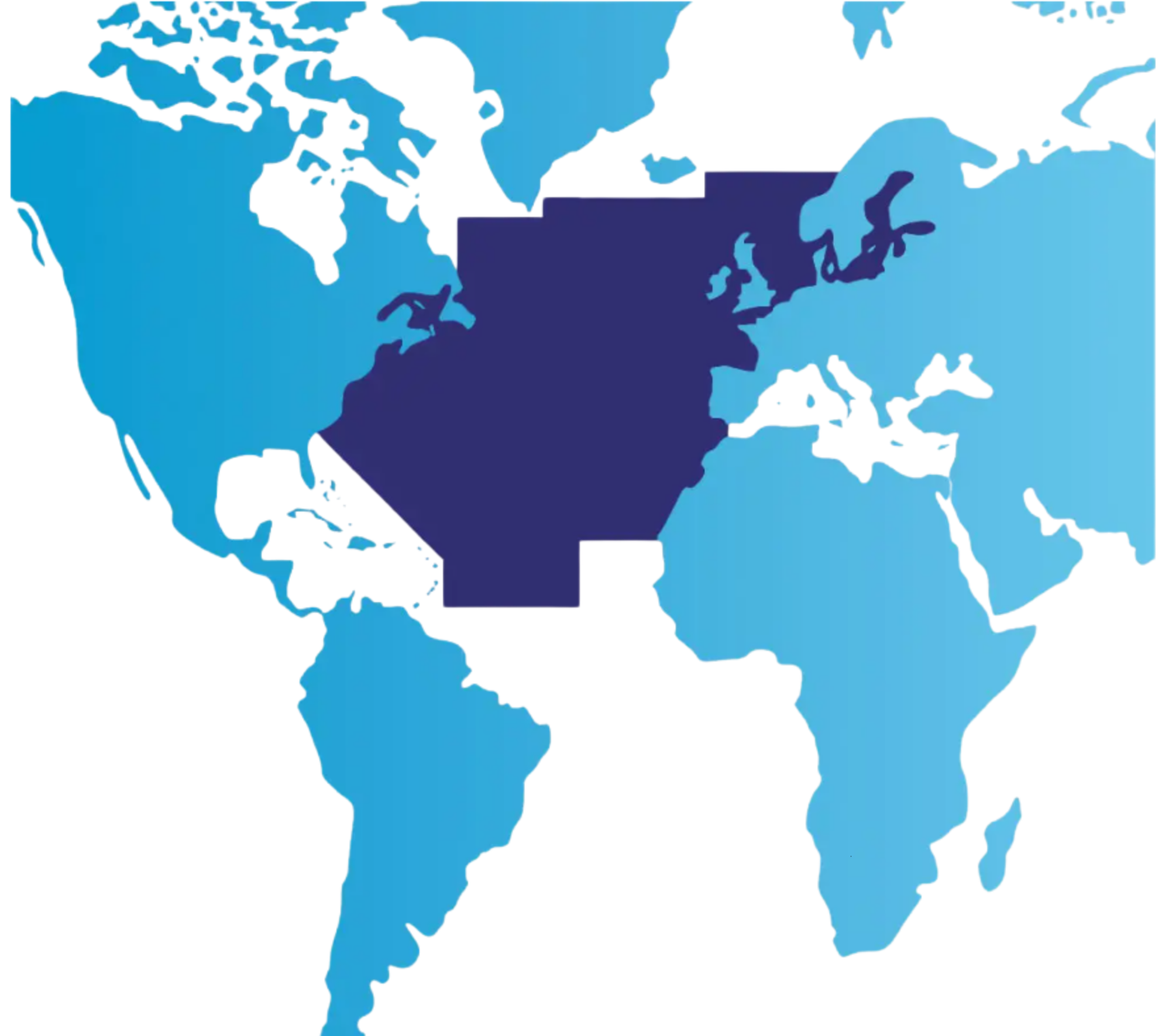
With 323 IMMAs already established across the Southern Hemisphere, scientists are now turning their attention to the Northern Hemisphere — nine ocean regions still to be fully mapped. The North Atlantic is one of the world’s most trafficked stretches of ocean, and with support from the yachting community and Water Revolution Foundation, 82 IMMAs have already been identified here.
Why did we choose the IMMA programme?
Highest scientific rigour
The IUCN’s highest-priority marine programme, led by independent scientists with no political or economic influence.
Multiplier effect
Each IMMA identified can catalyse marine protected areas, spatial planning, and conservation policy at national and international level.
Already influencing policy
IMMAs have shaped conservation in Vietnam, Bangladesh, and Mozambique, and are used by the International Whaling Commission and the US Navy.
Practical for mariners
IMMAs give captains and maritime operators clear guidance on how to navigate responsibly through sensitive habitats.