The Lagoon Valley Project protects, monitors, and actively restores this rare habitat, while sustaining the traditional fishing practices that have shaped it for centuries.
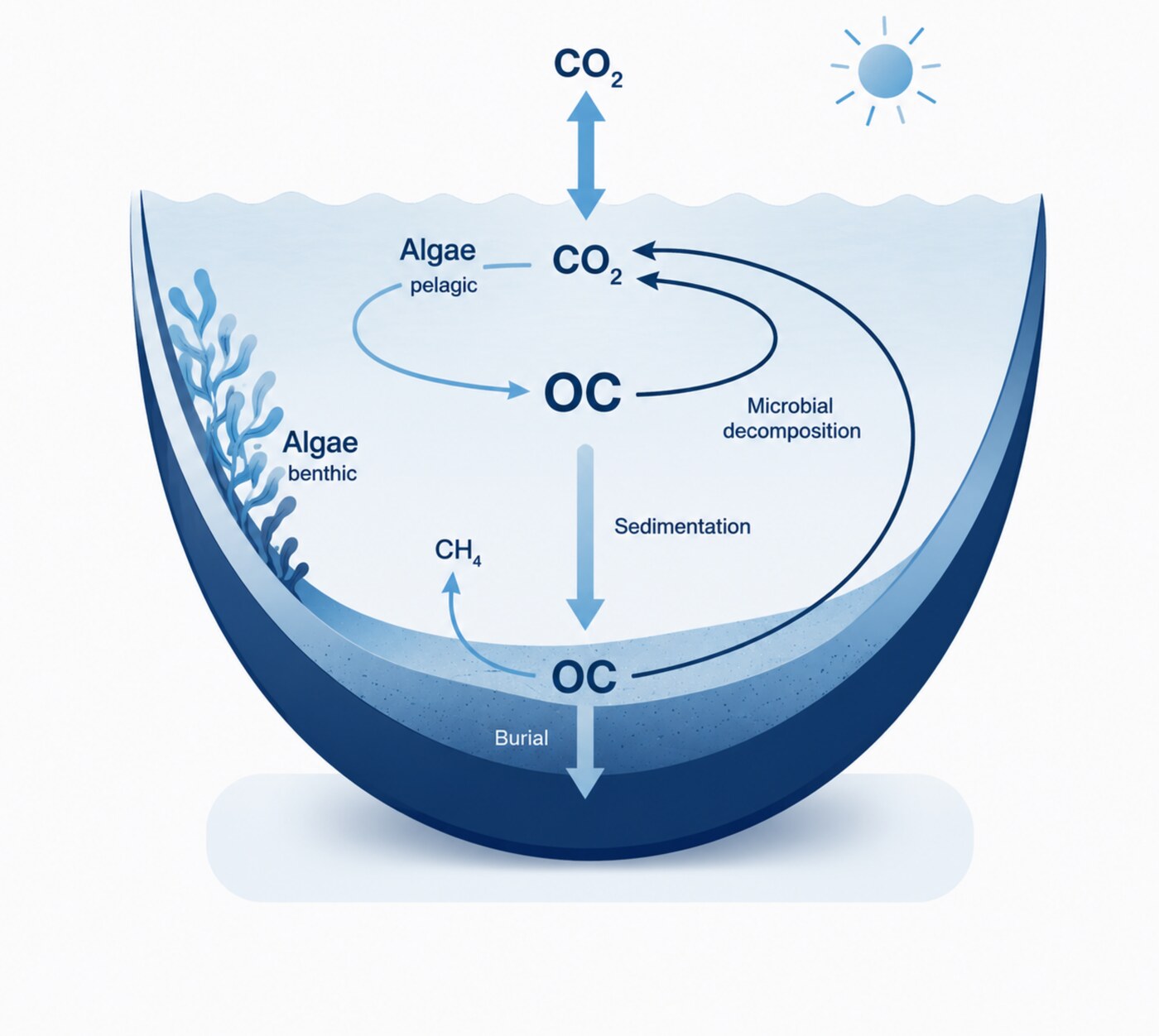
This is blue carbon sequestration
A UNESCO-listed ecosystem where traditional aquaculture and natural carbon capture coexist.
Sunlight Drives Photosynthesis
Both macroalgae (visible) and phytoplankton (microscopic) fix CO₂ from the atmosphere as they grow.

Biomass Sinks to the Seabed
In winter, algae die and fall to the muddy floor. The anoxic conditions slow decomposition dramatically.
Carbon Locked in Sediment
Organic carbon is buried in the lagoon floor — removed from the atmosphere for decades or centuries. This is blue carbon sequestration.

Certified, Measured, Verified
Seasonal sediment core sampling quantifies accumulation rates. Regular monitoring ensures the sink remains active and stable.
The Val Dogà ecosystem
Macroalgae: Visible seaweeds anchored to the mudflats. Rapid-growing, high-productivity CO₂ absorbers during the warm season.
Phytoplankton: Invisible to the eye, indispensable to the system. Free-floating cells that underpin the entire food web and fix vast quantities of carbon.
Anoxic sediment: Waterlogged mud that suppresses decomposition. The vault where carbon is sealed away from the atmosphere.
Tidal exchange: The engine that renews oxygen and nutrients and keeps the entire system alive.